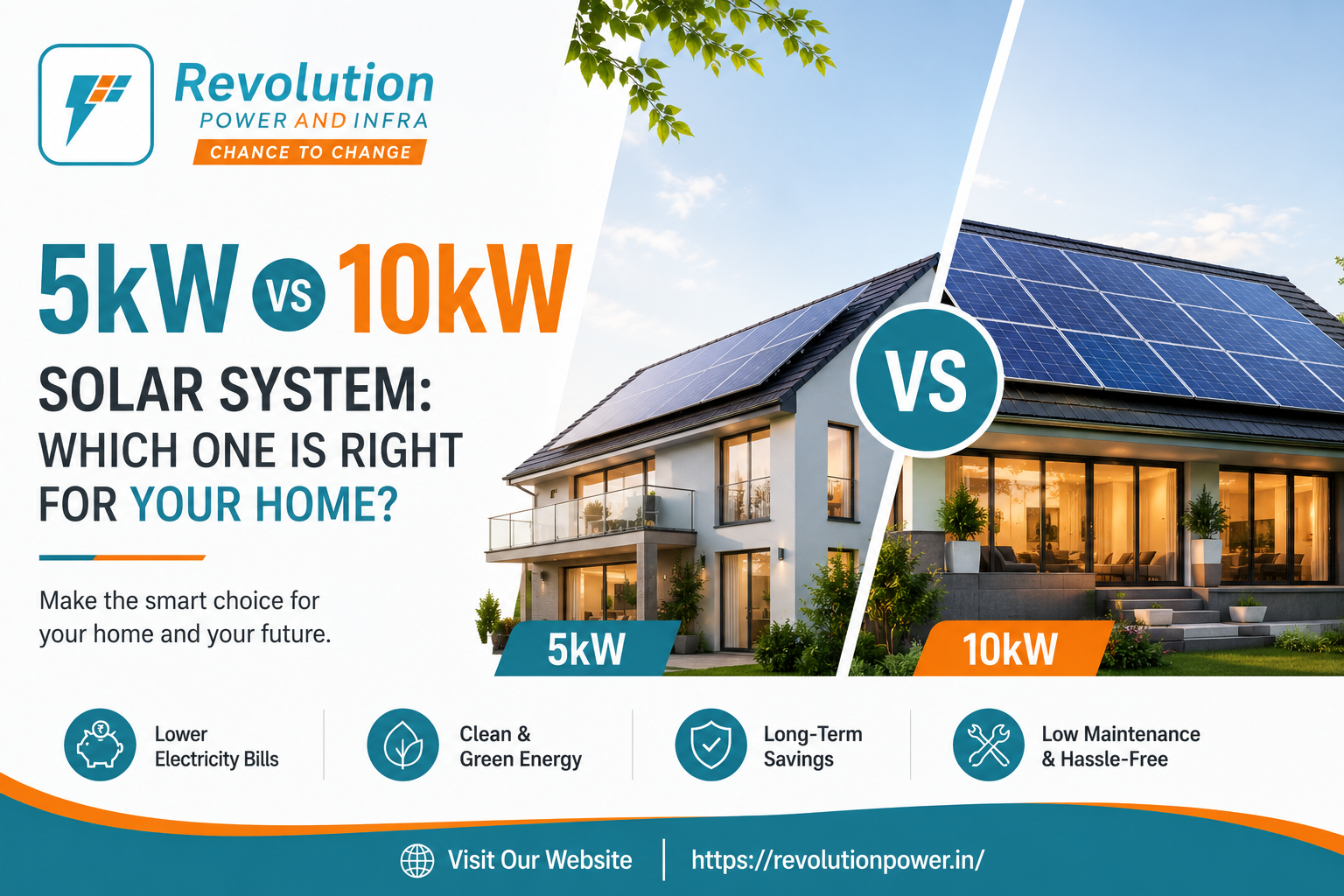
Summary: The 5kW solar system fits 2-3 BHK homes whereas the 10kW system serves large homes and villas that demand more electricity. The guide presents all costs and savings information together with subsidy details which enables you to choose the appropriate system without any doubts.
Table of Contents
Have you heard that India installed more than 24 GW of solar power during 2024 and residential rooftop solar installations currently outpace all other installation types. The number of homeowners who adopt solar power systems continues to increase because electrical expenses keep rising and solar power systems generate enough savings to cover their costs within five years.
However, this is probably the point where most people get puzzled and end up wasting time debating the pros and cons of a 5kW vs 10kW solar system, whereas the decision is really not just a matter of size. Each one of them is designed to meet the needs of different houses, different budgets, and different ways of living. Getting it wrong means either you pay for a capacity that you will never use or your system is always in shortage during the summer when the air conditioners are running the whole day.
So, let’s have a look!
Before getting into the details, here’s a quick details to give you a clear picture:
| Feature | 5kW Solar System | 10kW Solar System |
| Daily Power Generation | 20-25 units | 40-45 units |
| Approximate Cost (before subsidy) | ₹2.5 lakh-3 lakh | ₹3.5lakh – ₹4 lakh |
| Roof Space Required | 350-500 sq. ft. | 700-1,000 sq. ft. |
| Best Suitable For | 2-3 BHK homes | Villas, large homes, small offices |
| Monthly Bill Savings | 60-70% | 80-90% |
Get a FREE solar consultation from our experts. We’ll analyze your electricity bill, rooftop space, subsidy eligibility, and future energy needs to recommend the perfect solar system for your home.
Trusted by 500+ homeowners across Rajasthan for residential solar installations.
The 5kW solar system stands as the preferred option for Indian households which have moderate energy requirements. The system produces sufficient electricity to power all standard home devices together with two air conditioning units which operate continuously throughout the day. The system serves as your ideal option when your monthly electricity expenses range between ₹4,000 and ₹5,000.
Ideal Usage:
Average Monthly Output:
The 10 kW Solar Power System is an energy solution that can help provide support for larger residential buildings needing more electric power. The Solar Energy System is capable of running multiple air conditioning units as well as larger electric devices and providing any extra electric power to the grid through net metering to receive credit on customers’ total electric charges.
Ideal Usage:
Average Monthly Output:
Here is what you can realistically expect to pay in 2026, before and after the government subsidy:
The subsidy cap is fixed at ₹78,000 for systems of 3kW and above, so both systems get the same central subsidy amount. States provide extra top-up subsidies, which you should verify with your state DISCOM before making a final decision, because Rajasthan serve as a prominent example of this practice.
Rooftop solar system is often the deciding factor, especially for urban homeowners. Here is what each system needs:
The term shadow-free describes an area which does not have any obstructions from water tanks, parapet walls and nearby trees during daytime hours between 9 AM and 4 PM when sunlight reaches its highest intensity. The 5kW system will outperform all panels when your roof space cannot support a 10kW system because of shading problems which exist with larger systems.
This is where things get interesting. Over the years panel lifespan, the savings from both systems are significant, but the 10kW system naturally delivers more in absolute numbers.
Over the years, the 10kW solar system in Bengaluru and Chennai areas enables homeowners to save between ₹35 lakh and ₹50 lakh because of India’s annual electricity tariff increase, which ranges from 3% to 6% every year. The two systems show a payback period that ranges from 4 to 6 years, after which the system generates free electricity for its entire operational life.
The PM Surya Ghar Muft Bijli Yojana which started in 2024 serves as India’s largest solar subsidy program today. Here is how the subsidy structure works:
To claim the subsidy, you need to:
The installation process will provide you with better overall benefits if you check state-level subsidies with your local DISCOM.
Still not sure which one to go for? Run through these three questions before you decide:
Pull out your last three electricity bills and check your average monthly units. Under 400 units a month, 5kW is the right fit. Consistently above 600-700 units, a 10kW system will pay for itself faster.
The 5kW system becomes more affordable after subsidies when upfront costs present challenges. The 10kW system becomes affordable for homeowners who need financial assistance because all installers and banks currently provide solar loans and zero-cost EMI plans.
Planning to buy another AC? Adding an EV charger? Expecting the family to grow? Factor in what your electricity needs will look like in 3–5 years, not just today. Installing a slightly larger system now is almost always cheaper than upgrading later.
Now, as you’ve come to the conclusion you have a better understanding of 5kW vs 10kW solar system. Both the 5kW and 10kW solar systems are solid investments; the difference is just in matching the right one to your actual needs. The 5kW system meets your usage needs for medium-sized households which have monthly bills below ₹4,000 because it qualifies for full subsidy and achieves payback in 4-5 years. The 10kW system becomes the better financial choice because you operate a large home which uses multiple ACs and incurs monthly expenses exceeding ₹5,000.
Either way, 2026 is a good time to make the switch. Panel prices are competitive, the PM Surya Ghar subsidy is active, and the payback period has never been shorter. The only wrong decision is waiting too long to make one.
Is 5kW enough for a home?
For most 2-3 BHK homes with 1–2 ACs and standard appliances, yes, a 5kW solar system comfortably covers daily usage and reduces electricity bills by 60-70%.
Can a 10kW system run multiple ACs?
Yes. The 10kW system provides sufficient power to operate three to four air conditioners which have 1.5 ton capacity together with additional heavy electrical equipment, which makes it suitable for operation in large residential spaces and villa properties.
How many solar panels are needed?
A 5kW system needs between 12 and 15 panels which use 350 to 400W panels. A 10kW system needs between 24 and 30 panels which depends on the wattage and brand of each panel.
What is the payback period?
For both systems, the payback period is generally 4-6 years after the subsidy. Given that solar panels last 25 years or more, you are looking at 19-21 years of virtually free electricity after breaking even.